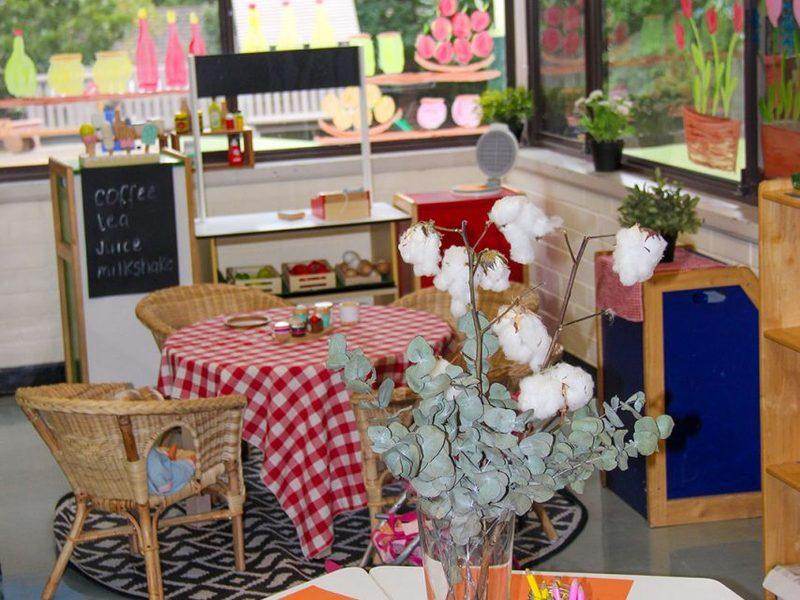
A small kindergarten with a generous outdoor classroom,
under mature gum trees in St Ives Chase.
Forty children, ages 2.5 to 6. The same director for years, long-tenured educators alongside her, and a generous outdoor classroom under mature gum trees. Open 7am to 6pm, 50 weeks a year. Child Care Subsidy approved.
Forty children, one familiar place.
St Ives Chase Kindergarten has been on Warrimoo Avenue since 1991. Forty children, ages 2.5 to 6. Two classrooms, Koalas and Joeys. Educators who stay. Families who stay too, often through a second child, sometimes a third.
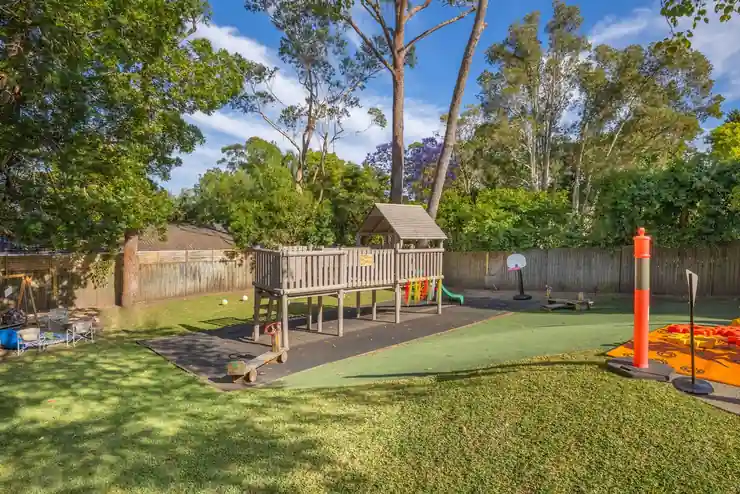
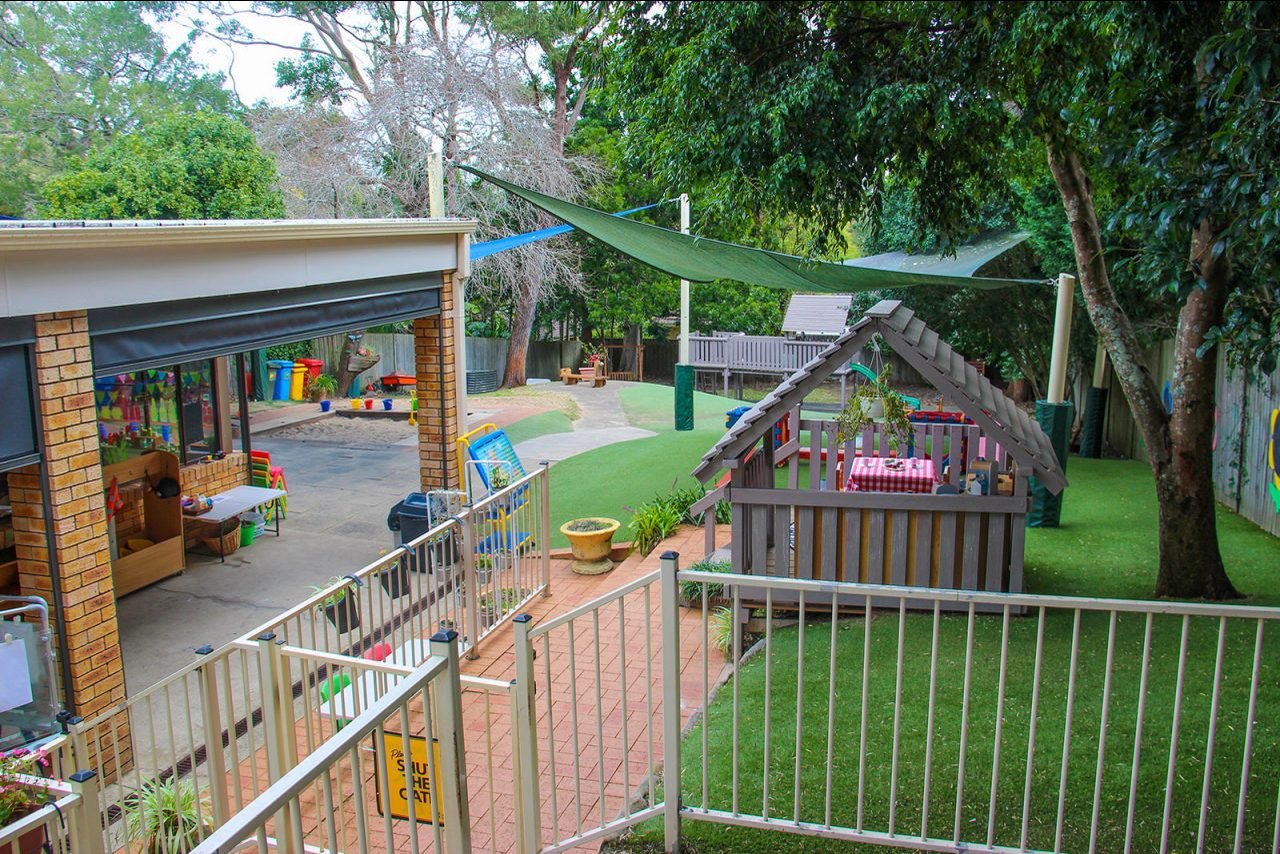
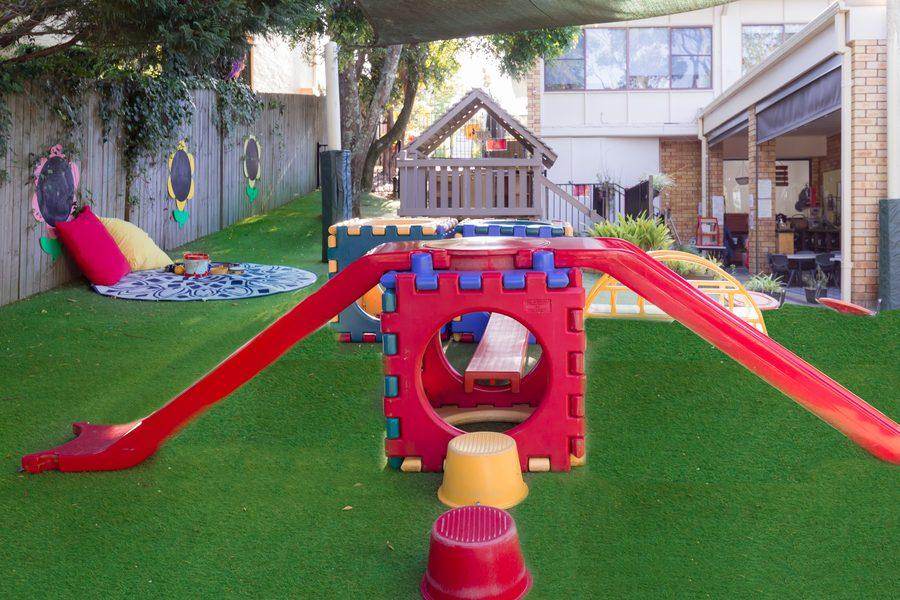
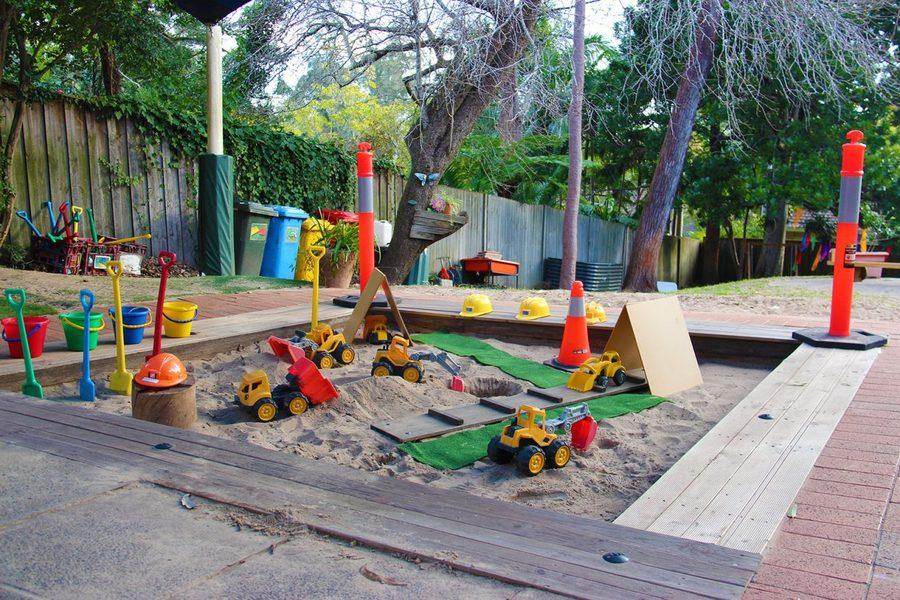
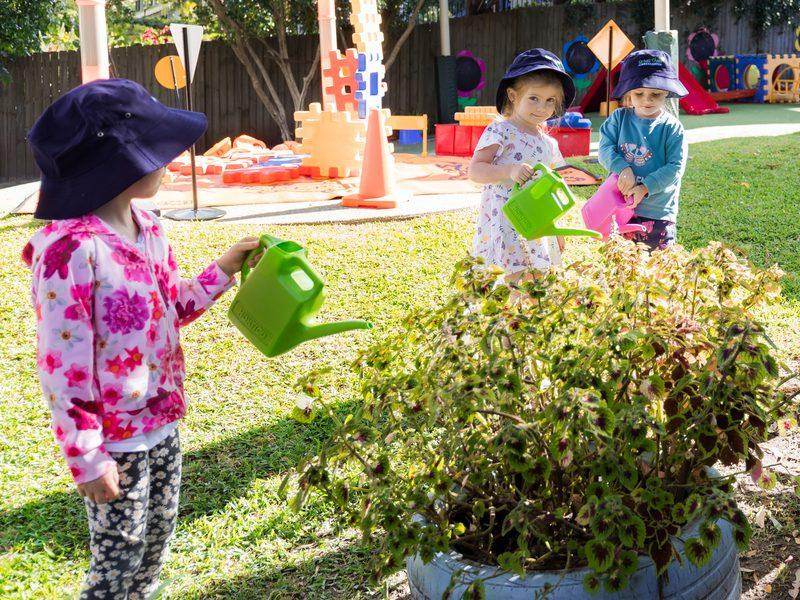
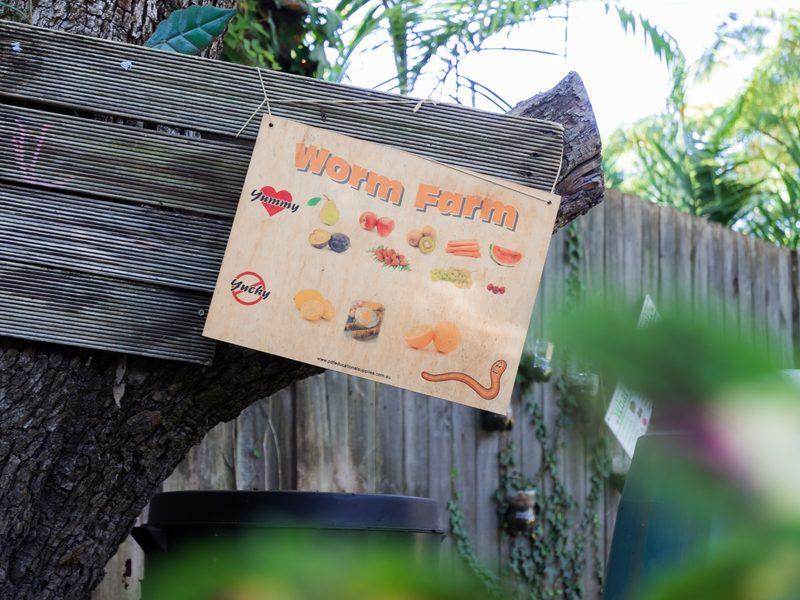
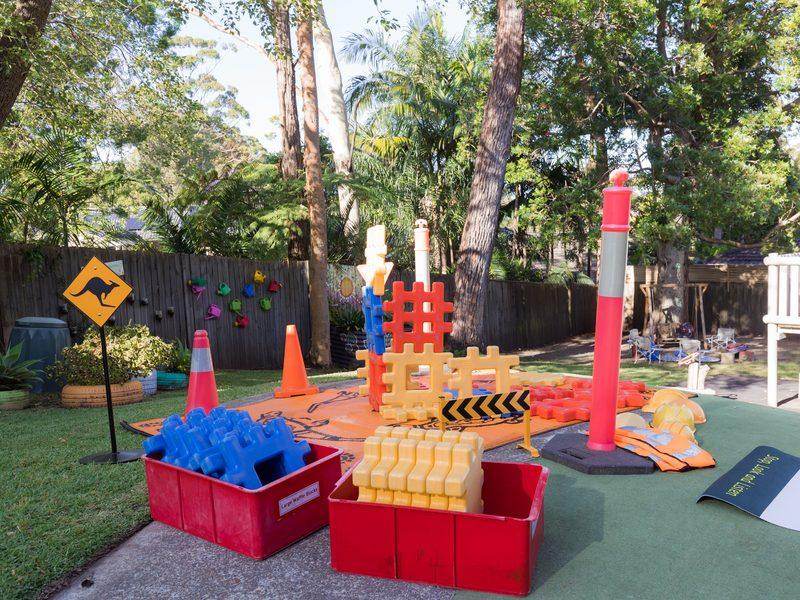
The yard is bigger than most. Gum trees, a cubby, a sandpit, a worm farm, a vegetable garden the children help look after. Most days the children are outside more than they are in.
Our practice is guided by a Reggio-inspired approach that we have thoughtfully developed over many years. I have led the centre since 2017, with a strong image of the child as capable, curious, and full of potential.
In April 2025, I travelled to Reggio Emilia, Italy with the Reggio Australia International Study Group, visiting the Loris Malaguzzi International Centre. The experience offered a meaningful opportunity to listen, observe, and reflect alongside others who share a deep respect for children's thinking and learning.
I came back with renewed perspectives, particularly around pedagogical documentation as a tool for making learning visible, the intentional design of environments as the “third teacher,” and the importance of honouring children's questions as starting points for inquiry. These reflections have gently shaped and extended our everyday practice, while also affirming what we already believe: that learning is relational, children communicate in many languages, and educators work alongside them as co-constructors of knowledge.
What our families say.
We love St Ives Chase Kindy. Our two sons have both been there, with one still currently attending. We've lived all over Sydney and still drove our eldest down to St Ives Chase Kindy each day. If you're looking for a service that acts as a second home, then St Ives Chase Kindy is it.
Eight years ago, we sent our daughter here and she had a safe, joyful experience. Even though many new centres with seemingly better facilities have opened nearby since then, we still chose to send our second child here. Director Tina is highly responsible, always responsive to parents' needs, and stands firm on the right values.
I cannot express enough how much I cherish St Ives Chase Kindergarten. The team is truly exceptional, going above and beyond to care for our children. Tina, with her kindness and nurturing spirit, runs the school seamlessly, making me feel completely confident that my son is not just looked after, but genuinely cared for.
The team at Chase provide an ideal structure and rhythm for the kids, that we feel sets them up well for primary school. The events they hold for kids and parents and the regular communications mean you are not just joining a kindergarten, you are joining a community. Having checked out numerous other alternatives before choosing Chase, the yard and the play equipment are exceptional.
Since our family recently moved to Australia, we had many worries about sending our kids to kindergarten, both language-wise and culturally. Both of our children have happily adapted and are truly enjoying their time here. Because it's not a large centre, each child receives more personal attention. The director, Tina, is always warm and professional. She's honestly one of the most lovely people I've met.
We absolutely love the warm staff, community vibe and huge space here, couldn't recommend it enough. The app posts show how much fun they're having whilst learning so much through all the well-structured, play-based activities. Our little girl is off to St Ives North Public School next year and we feel this preschool has been excellent preparation for her.
Play-based, and outside as much as we can be.
Two things shape the day. A play-based approach we've refined over many years. And an outdoor classroom under mature gum trees that the children spend more time in than out.
How a day unfolds in our two rooms
Our work is shaped by a Reggio-inspired approach that has been thoughtfully practised and refined over many years. We see children as capable, full of ideas, and active researchers of their own world. Our planning begins with careful observation. Rather than following set themes, we respond to children's interests and theories as they unfold.
Joeys Room (2.5 to 4 years). Learning grows through play, connection, and discovery. Educators set up inviting, open-ended experiences that encourage curiosity: loose parts, sensory materials, simple provocations. Children explore at their own pace, returning to ideas, building confidence, and expressing themselves in many ways.
Koalas Room (4 to 5 years). Children's ideas are explored more deeply over time. Projects emerge from shared interests and are revisited across days or weeks. Through drawing, building, and discussion, children test their thinking with educators alongside them.
An outdoor classroom under mature gum trees
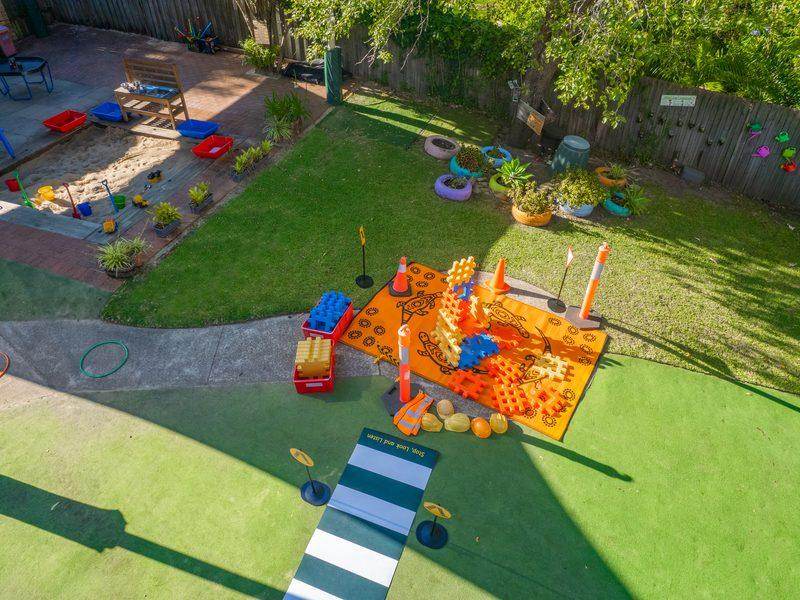
Mature gum trees overhead, a cubby, a sandpit, a worm farm, a vegetable garden the children look after. There are days the children barely come inside.
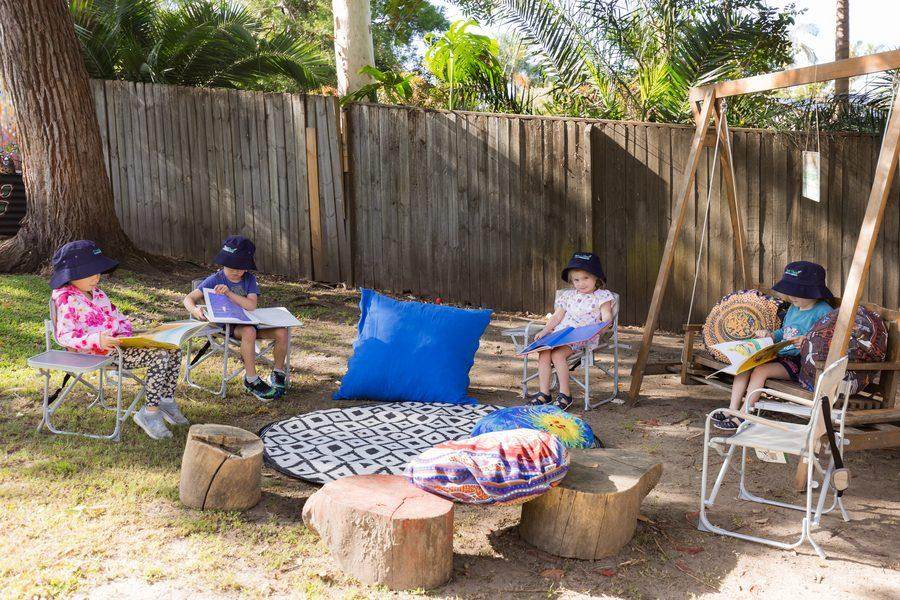
We set up simple, inviting activities outdoors to encourage children to explore and be curious. Natural materials like leaves, sticks, bark, stones and water sit alongside tools such as magnifying glasses, clipboards and drawing materials. Children might make pictures with natural items, build with sticks, or look closely at bugs and plants. We follow their interests and support them to work together, solve problems, and share ideas. Educators learn alongside the children, asking questions to extend their thinking.
The children feed the worm farm with their morning tea scraps. They notice when the wattle is in flower and when the jacaranda drops. On Wattle Day they learn that the wattle tree has been important to First Nations people for far longer than the rest of us have been here. Caring for a small piece of land is the start of caring for a bigger one.
What guides our days.
Seven things we hold ourselves to. Tap each one to read more.
Child safety
Child safety is the floor under everything else. We hold ourselves to the National Quality Standard and the National Principles for Child Safe Organisations, and we review our policies, procedures, and practices continuously. We listen to children. We take their voices seriously. Active supervision, professional practice, and current NSW guidance are not negotiable.
An image of the child
Educators see children as capable, curious, and full of potential. They follow children's interests, listen to their ideas, and support learning through meaningful, hands-on experiences, helping each child feel valued and confident.
The hundred languages
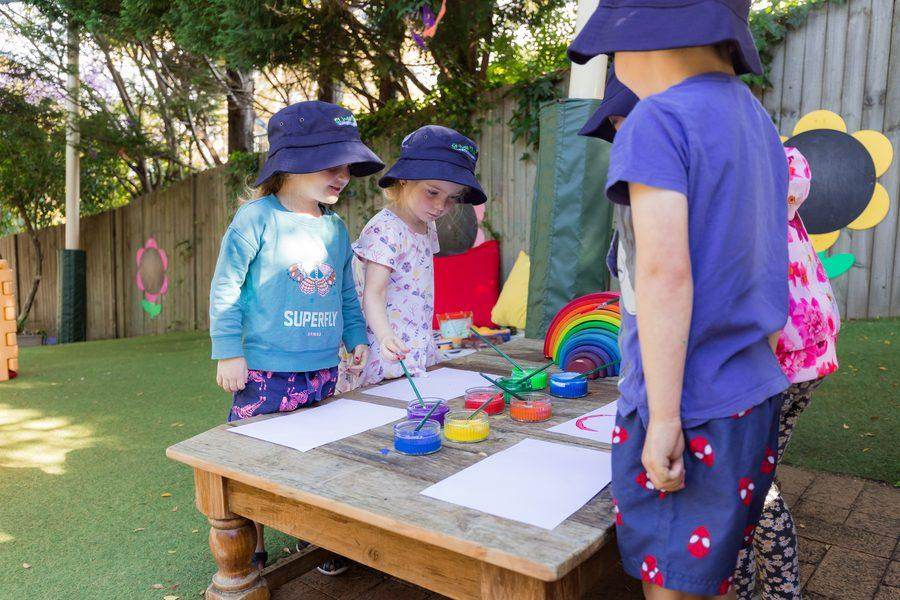
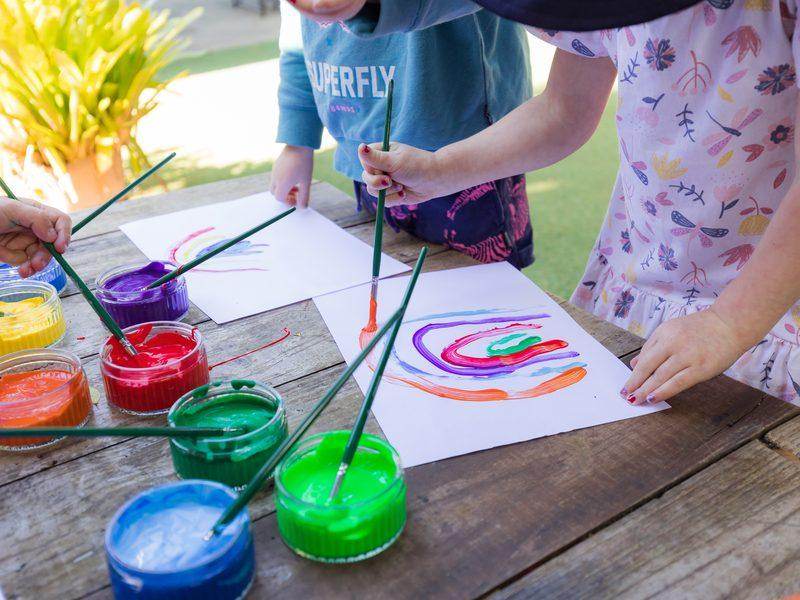
At the kindergarten, we honour the idea of the hundred languages by giving children many ways to express their thinking and ideas. Children might draw, paint, build with loose parts, use clay, move their bodies, sing, tell stories, or explore in nature. Educators provide open-ended materials and time for children to create, communicate, and revisit their ideas in different ways. This supports each child to express themselves, share their thinking, and learn in ways that are meaningful to them.
Children as researchers
The educators document what the children do. Photographs, quotes, the drawing a child made on Tuesday morning. We pin it on the wall, slowly, over weeks. The documentation tells the children that what they noticed mattered. It also tells us, as educators, where to take the project next.
The environment as the third teacher
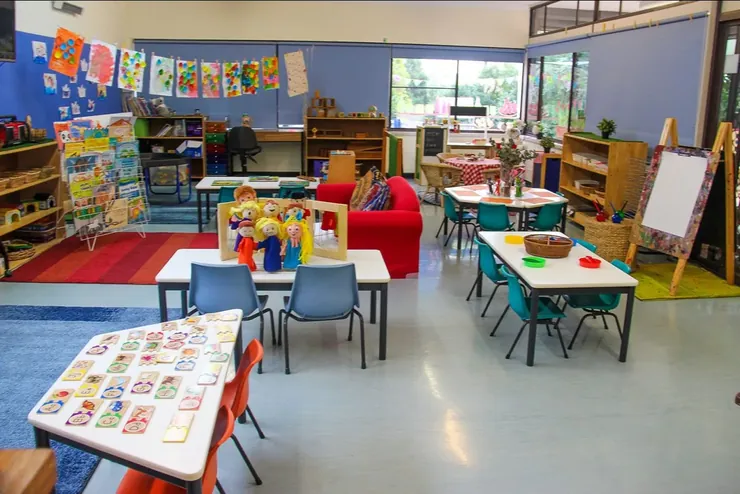
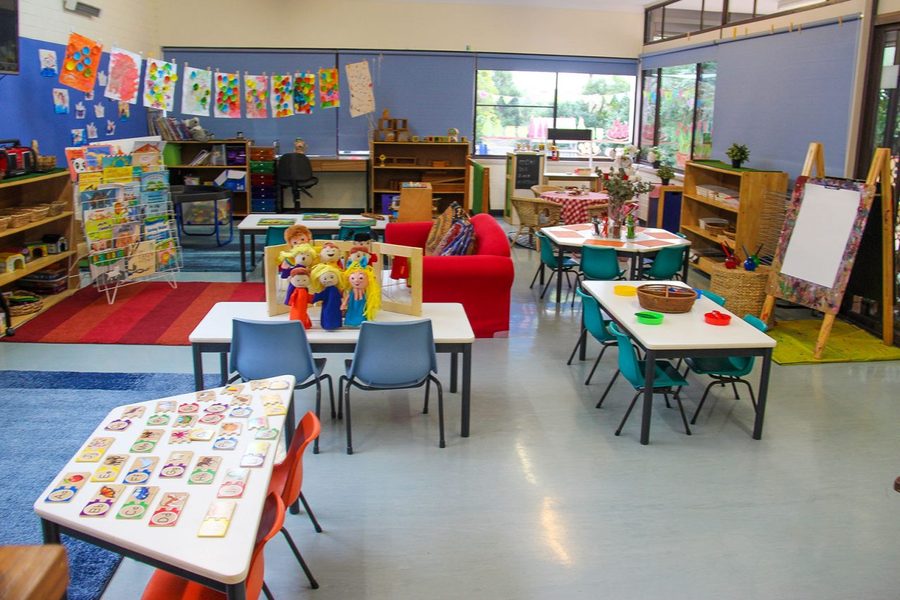
We see the environment as the third teacher. Our spaces are calm, inviting, and thoughtfully arranged to support children's learning and independence. Indoors and outdoors, we provide natural materials, open-ended resources, and areas for creativity, exploration, and quiet reflection. Under the gum trees, children connect with nature through play and discovery. Each space is carefully set up to spark curiosity, encourage collaboration, and support children to explore their ideas. The environment grows and changes with the children, reflecting their interests and making learning visible.
Family and community
Families and community are at the heart of our kindergarten. We value the strong connections we build over time, often welcoming siblings who already feel a sense of belonging. We honour the diverse cultures within our community by celebrating festivals such as Diwali, Lunar New Year, Easter, and Christmas, as shared by our families. We also acknowledge the Country on which we learn and play, fostering respect and connection to the land. From the very first morning, we work in partnership with families to create a warm, inclusive environment where everyone feels seen, respected, and a true sense of belonging.
Caring for the land
We care for the land by helping children build respect and connection to nature every day. We spend time outdoors under the gum trees, noticing changes in the seasons, caring for plants, and observing living things.
Children learn to look after their environment by recycling, reducing waste, and using natural materials in their play. We talk about the importance of the land and acknowledge the Country we learn and play on. Through these everyday experiences, children develop a sense of responsibility, respect, and care for the world around them.
A visual walk through.
Take a look at some of our spaces, indoor and outdoor, and the kinds of play we set up for the children each day.


The people at the gate every morning.
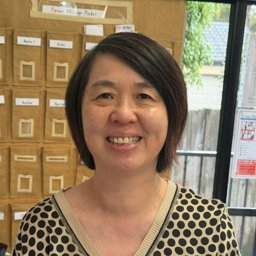
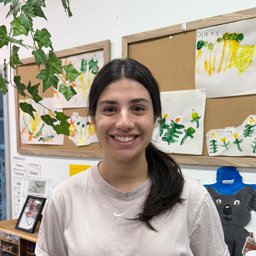
Tina has led the centre since 2017, with Lisa alongside her since 2010. Around them is a team of educators who bring decades of combined experience to the children they look after every day, several of them studying their early childhood degrees as they teach.
Nahid joined the team in 2025 and brings over 25 years of early childhood experience. She believes children learn best through play, relationships and a strong sense of belonging, and values trusting connections with children, families and the wider community. She is in the final year of her Bachelor of Early Childhood Education.
Lisa has been part of the St Ives Chase team since 2010 and is a familiar, reassuring face for many of our families.
Rebecca joined the team in 2020 and works full-time in the Koalas classroom. She is in her final year of a Bachelor of Early Childhood Education and a Bachelor of Primary Education (Birth-12), and brings her studies into her practice each day. She is passionate about creating a warm, inclusive environment where every child feels safe and confident.
Jenny brings seven years of early childhood experience to the team. Before joining us, she worked as an Inclusion Support Educator, supporting children with additional needs to feel fully included in learning. As a bilingual educator, she values building meaningful connections with children and families from diverse cultural backgrounds.
Tara joined us in 2023 and is studying her Bachelor of Education at Macquarie University.
Emily joined the team in 2024 and brings over 20 years of experience working with children. She has supported families across London, New Zealand, Hong Kong and Sydney, in roles ranging from nanny to newborn night nanny to educator, and has recently completed her Certificate III in Early Childhood Education and Care.
Bianka started with us in 2026 and is studying her Certificate III in Early Childhood Education and Care with Open Colleges. She loves building meaningful connections with families and her fellow educators, and most of all forming strong, positive relationships with the children.
The best way to meet our team is in person. They're who you'll see at drop-off and pick-up every day.
Book a tourTwo flexible daily options.
Choose between preschool hours or extended long day care, from 2 to 5 days per week. Child Care Subsidy approved, so most families pay significantly less out of pocket.
- Applies to preschool & long day care
- Enrol & start by 31 December 2026
- Automatically applied to your first invoice
Preschool
Long Day Care
CCS gap-fee calculator.
Most families don't pay the listed daily rate. Once your Child Care Subsidy is applied, your real out-of-pocket fee, the "gap fee", is much lower. Use this estimator to get a rough number based on your family income, days per week, and which option you're considering.
If you have an older child also in approved care, the higher subsidy rate (up to 95%) applies to the younger sibling. The option and fee shown above will represent the younger sibling for this calculation. Available only if family income is under $367,563.
How this is worked out
This estimate uses the Australian Government's Child Care Subsidy rules for the 2025-26 financial year (effective 7 July 2025). Your CCS rate is calculated from your combined family adjusted taxable income:
- Earning under $85,279: 90% subsidy
- Reduces by 1% for every $5,000 above that
- Hits 0% at $535,279 and above
The subsidy applies to the lower of the centre's hourly fee or the government's hourly rate cap of $14.63 (centre-based care, 2025-26). Each option above has its own session length, which changes the hourly fee calculation.
Second child higher rate: If you have a second child aged 5 or under in approved care and your family income is under $367,563, the second child gets your standard rate plus 30 percentage points, up to a maximum of 95%.
5% withholding: Centrelink holds back 5% of your CCS each fortnight as a buffer against end-of-year reconciliation (this is the standard default rate). The figures above include this withholding, so they reflect what you'll actually pay each fortnight. If your income estimate is accurate, the withheld amount is paid back to you at tax time. You can change the withholding rate in your myGov account.
Activity test and the 3-Day Guarantee: From 5 January 2026, every CCS-eligible family gets at least 72 hours of subsidised care per fortnight (about 3 days per week), regardless of work or study activity. Families where each parent does more than 48 hours of recognised activity per fortnight can access up to 100 hours per fortnight (about 5 days per week). For 4 or 5 days per week of care, this distinction matters: if your fortnightly hours of care exceed your subsidised cap, the hours above are charged at the full fee.
This is an estimate only. Centrelink will give you your exact rate after you lodge a claim through myGov. We're happy to walk through your specific situation on a tour, or you can ring Tina directly on 02 9449 8829.
Unhurried mornings, big afternoons outside.
Our rhythm flexes with the seasons, the weather, and what the children are most interested in on any given day. Here's roughly how it looks.
- Extended hours arrivalsLong day care children begin arriving and settling into activities.
- Preschool arrivals & playChildren arrive and participate in various indoor and outdoor experiences.
- Pack awayChildren help tidy up and prepare for morning tea.
- Morning teaFrom home, in paper bags in the fridge.
- Music groupSongs, dances, movement activities and instruments.
- Outdoor playMid-morning while it's still cool enough.
- Language groupStories, picture discussions and follow-up activities.
- LunchFrom home, brought in labelled containers.
- Rest timeBeds for those who need sleep; afternoon group activities (like Favourite Book Bag) for those who don't.
- Outdoor play & pick-upPreschool children begin to go home.
- Extended hours outsideLong day care children play outside and help pack away.
- Afternoon teaProvided by the centre for long day care children.
- Indoor play until home time
- Extended hours arrivalsLong day care children begin arriving and settling into activities.
- Preschool arrivals & indoor playChildren arrive and start with indoor activities while it's still cool outside.
- Morning teaFrom home, in paper bags in the fridge.
- Music groupSongs, dances, movement activities and instruments.
- Outdoor activitiesThe warmest part of the day for running, climbing, nature play.
- Language groupStories (books, puppets, felt boards), picture discussions and follow-up games.
- LunchFrom home, brought in labelled containers.
- Rest timeBeds for those who need sleep; afternoon group time (like Favourite Book Bag) for those who don't.
- Outdoor play & pick-upPreschool children begin to go home.
- Extended hours outsideLong day care children play outside and help pack away.
- Afternoon teaProvided by the centre for long day care children.
- Indoor play until home time
Life at the kindy.
A few recent moments from our days, from quiet corners of play to busy afternoons in the garden.


Ready for big school, without rushing it.
Most of our children go on to St Ives North Public School, St Ives Public School and Pymble Public School. Many to Sydney Grammar St Ives Preparatory, Brigidine, Masada, Knox and Pymble Ladies' College. We have walked, hand in hand, to St Ives North's Book Week parade more than once.
School-readiness is not a worksheet program. It is the habit of listening in a group. The patience to wait. The confidence to ask. The fine motor skills built by holding a real paintbrush every day, not by tracing letters too early. The stamina to sit through a story. The trust that an adult who is not your parent will look out for you.
Those are the dispositions every Sydney North Shore school says it values, public or independent. We build them slowly, through play, over a year or two. By the time your child walks into their first year of primary school, those things feel ordinary.
On Warrimoo Avenue, St Ives.
Set in a quiet residential pocket of St Ives, with generous gardens and play space all the way out the back. A short drive from Mona Vale Road, and easy on the way in from Gordon, Pymble, Turramurra and Wahroonga.
St Ives NSW 2075
Families travel from
Good to know.
Can't find your question? Give us a call on 02 9449 8829. We're always happy to chat.
Most things should be labelled with your child's name so they don't go missing or get mixed up. A small backpack with:
- A spare set of clothes (including socks and underwear) in a labelled bag
- A labelled water bottle
- A healthy morning tea and lunch in separate, labelled containers
You don't need to send a hat. We supply a broad-brimmed hat at no charge that stays at the centre, so your child always has one ready, even on days you forget to pack one. Sunscreen is also supplied and applied throughout the day, but please send your child with a first layer already on in the morning.
We're a nut-aware centre. We ask families to leave nut products at home, and we keep the centre free of obvious nut foods (peanut butter sandwiches, Nutella, whole nuts, and so on). Educators check lunch boxes each day and put anything that contains nuts to one side until home time.
The reason we say "nut aware" rather than "nut free" is honesty. We can't guarantee that no trace of nuts ever enters the building, since we don't prepare every food on site and food can be processed in shared facilities. What we can guarantee is that every educator is alert to allergies, that we manage them carefully, and that we work closely with each family who has a child with allergies. Please tell us about any specific allergies on enrolment so we can plan together.
From 2.5 years of age, through to when they start primary school (typically age 5 or 6). We don't take babies or toddlers, the centre is set up for the preschool years specifically.
7:00am to 6:00pm, Monday to Friday. We're open all year round and close only for public holidays and a short break over Christmas.
Whenever works for your family between 7:00am and 9:30am. Many families arrive between 8:30 and 9:00am so their child has time to settle in before the morning's activities begin in earnest. Children arriving much later can find it harder to join in once their peers are already absorbed in their day, but we understand mornings don't always go to plan, so just let us know if you're running late.
Our educators are very experienced at supporting children struggling with separation. You can help by staying for a short while, saying a quick goodbye, and leaving when you say you're going. Always say goodbye. Slipping out unseen leads to mistrust and more distress for your child.
If your child is distressed, hand them to a staff member and take cues from them. You're welcome to call during the day to check in.
Under 3: that's completely fine. We supply nappies at no extra charge and change children whenever they need it. Most children naturally transition out of nappies during their time with us, somewhere between 2.5 and 3, often led by what they see their friends doing. We work with you on this, if you're actively toilet training at home we'll keep things consistent at the centre, and if your child isn't ready yet we'll keep them comfortable until they are.
From 3 onwards: we expect children to be confident using the toilet independently. By that age, being out of nappies is part of the readiness that helps a child settle into the older group and feel capable among their peers. If toilet training is still a work in progress as your child approaches 3, please talk to us. We're happy to chat through where they're at.
Not at all. Every child is different, and we follow each child's lead. Rest time runs from 1:00 to 1:45pm every day. Children who need a sleep can have one on a comfortable bed, and children who don't are offered quiet activities instead, like our Favourite Book Bag. The goal is a calm, restful break in the middle of the day for everyone.
We teach through play, guided by the Early Years Learning Framework. The program follows what the children are curious about. One week it might be how a koala lives in a eucalyptus tree, painted after a week thinking about mammals. The next, the structure of the Sydney Harbour Bridge with magnetic tiles. The children listen, take turns, manage their things, ask their own questions, look after each other. They build early literacy and numeracy through real materials, not worksheets. By the time they start big school, the habits feel ordinary.
Please keep your child home if they have a temperature, need pain-relief or cough medicine, have a coloured discharge from their eyes or nose, are vomiting or have diarrhoea, have an unexplained rash, or are generally unwell.
After a fever, vomiting, or diarrhoea, children must be symptom-free for at least 24 hours (48 for vomiting/diarrhoea) before returning.
We're a CCS-approved service. Most families significantly reduce their daily fees. Your eligibility and percentage depend on your household income and activity test. Apply through your myGov account linked to Services Australia. Once approved, the subsidy is paid directly to us and we reduce your fees accordingly.
Not sure what your percentage will be? When you come for a tour, Tina can walk through your specific situation with you and help you estimate your CCS rate before you commit.
Please do, in fact we'd encourage it. A tour is the best way to see whether the feel of the centre is right for your family. You meet Tina and the educators, see the playground and the classrooms, watch how the day flows, and ask the questions you didn't know to ask. Tours usually take about 30 minutes, and you're welcome to bring your child along. Book through the form below or call us on 02 9449 8829.
Family circumstances change, and we understand that sometimes you need to adjust your child's days or make a move. We ask for 4 weeks' written notice for any change to permanent days or for withdrawal, which gives us time to plan carefully for your child's transition and for the group. Your $500 holding deposit is applied to your final invoice when you leave, or refunded if 4 weeks' notice has been given.
You can send your notice by email to either:
If you'd like to talk it through first, we're always happy to chat. Just give us a call on 02 9449 8829.
Come and see the centre for yourself.
Book a tour with our team. A walk around the space, time to ask questions, no pressure. Usually 30 minutes, and you're welcome to bring your child.